Ragdoll
Blue eyes and a famously relaxed nature. The Ragdoll was developed in California in the 1960s. Its blue eyes, pointed coat, slow growth, relaxed personality and simple care needs.
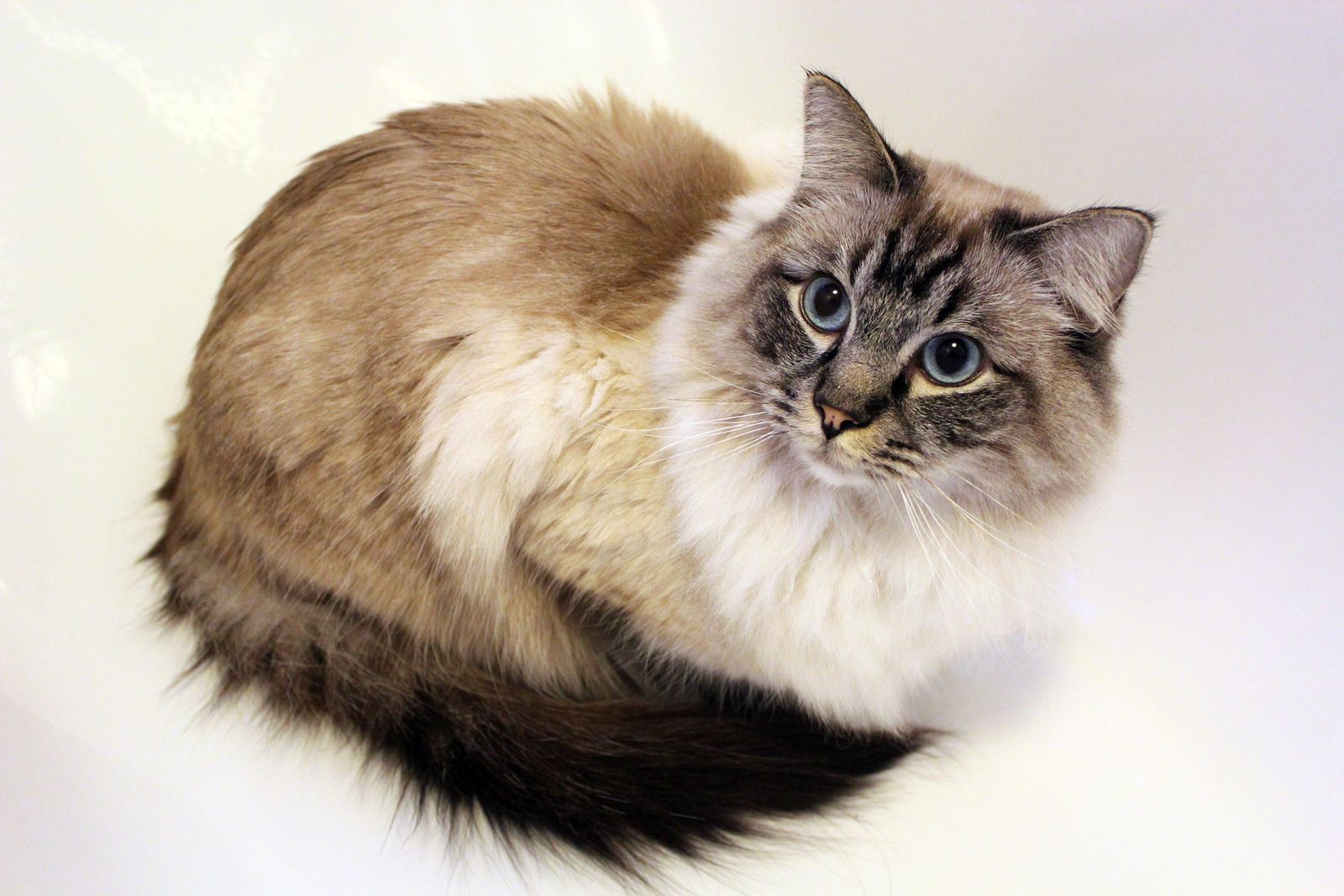
A three-year-old Ragdoll: BlackIceNRW, CC BY-SA 3.0
A Californian original
The Ragdoll was developed in the 1960s in Riverside, California, by a breeder named Ann Baker. The early cats came from local long-haired cats, and breeders went on to refine the look and calm temperament that the breed is known for.
The name comes from the way many Ragdolls go floppy and relaxed when they are picked up, like a child's rag doll. Not every Ragdoll does this, but the breed is known for its easygoing nature.
The look
Ragdolls are pointed cats: the body is lighter, while the face, ears, legs and tail are darker. The same genes that create this pattern also give the breed its striking blue eyes. Common patterns are colourpoint, mitted, with white paws, and bicolour, with more white on the face and body.
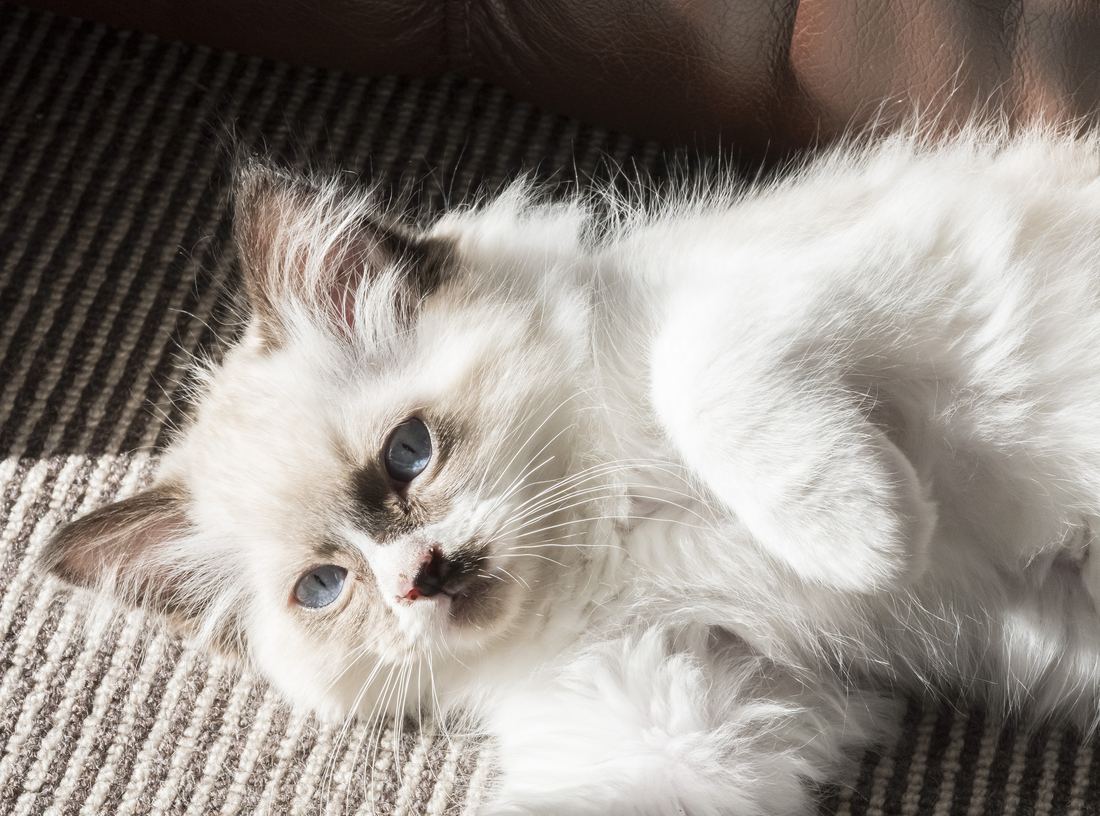
Kittens are born almost white and their colour develops slowly. CFA says Ragdolls reach full coat colour at around two to three years and full size and weight at about four. Mature males can reach or exceed 20 pounds, and females are usually smaller.
Personality
Ragdolls are often described as gentle, affectionate and people-focused. Many greet their owners at the door and enjoy being in the same room, and they tend to be quieter than some other breeds.
Because they are so trusting, many owners keep Ragdolls indoors or give them safe outdoor time in an enclosed space. Play sessions with wand toys keep them active, which helps them stay a healthy weight.
Because Ragdolls are so social, they can become lonely if they spend long hours alone. Many owners find that two cats keep each other company, or plan for daily play and cuddle time. Puzzle feeders, window perches and gentle training with treats are good ways to keep a laid-back Ragdoll interested in the world around it.
Coat care and health
The silky, medium-long coat has less undercoat than many long-haired breeds, so it mats less easily. A brush once or twice a week is usually enough.
Some Ragdolls carry a gene linked to a heart condition called hypertrophic cardiomyopathy. Responsible breeders can test for it, and a vet can advise on heart checks. Regular checkups are the best way to keep any cat healthy.
- A three-year-old Ragdoll: BlackIceNRW, CC BY-SA 3.0
- A Ragdoll kitten: Jules & Jenny from Lincoln, UK, CC BY 2.0
Text written by Most Beautiful Pets.